
Icons for Superfund contamination
While consumed for the last few months creating the world of American Toxics, a website & gallery installation about toxic waste sites across America, I worked on dozens of smaller pieces. For documenting contamination at these waste sites, the US EPA (Environmental Protection Agency) uses a set of “contaminated media types” categorizations, many of which are difficult for the public to understand. One of the sub-projects I embarked on was making these legible, and making icons to represent them all.
I was inspired by artist Alexis Oltmer, who made handdrawn icons as part of her Superfund Data Remix book, page 99:
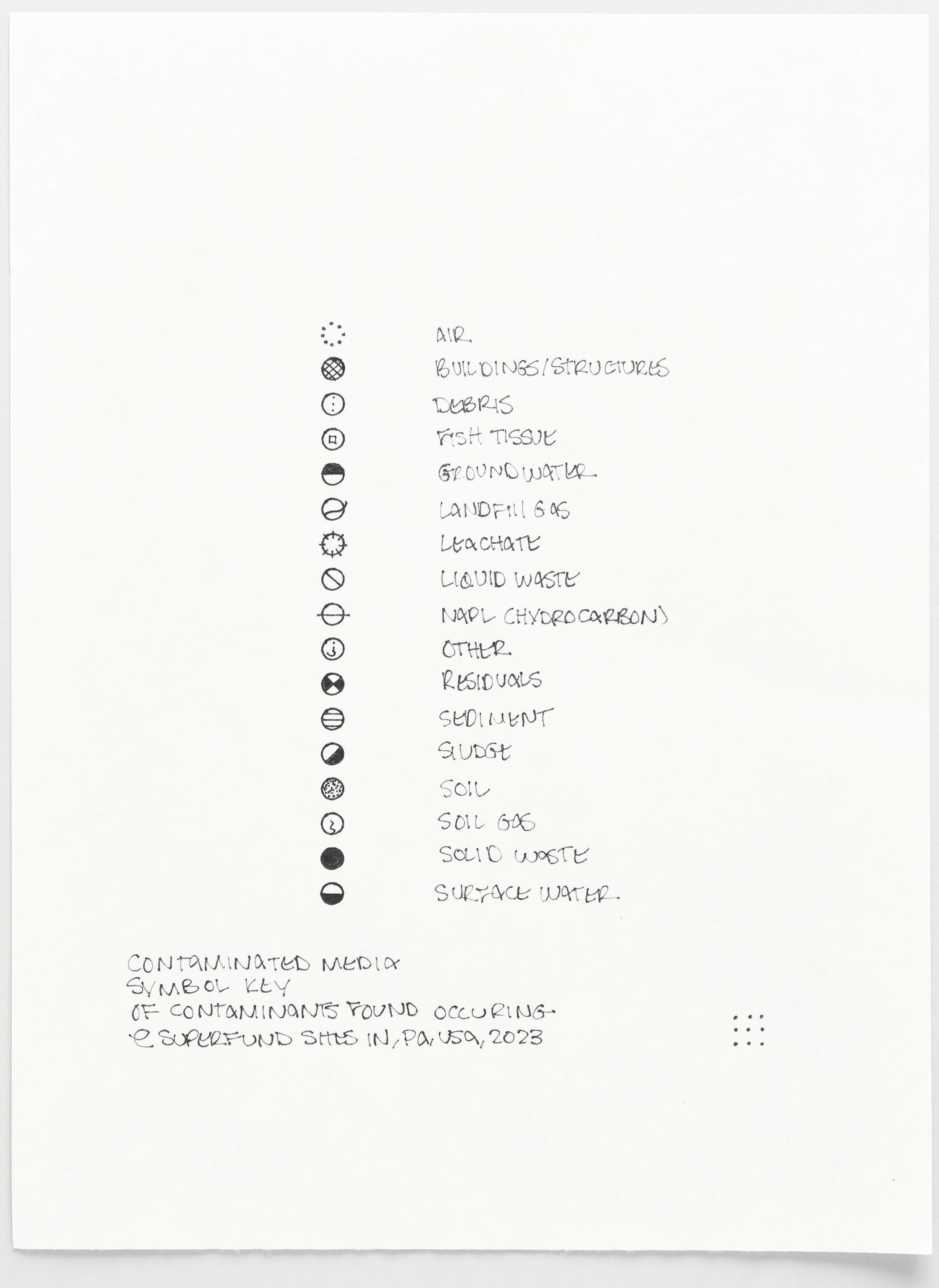
She retained the original EPA names, which made sense for her remarkable installation, but I wanted to rename some (e.g. NAPLs and “vapor intrusion”) to make them clearer.
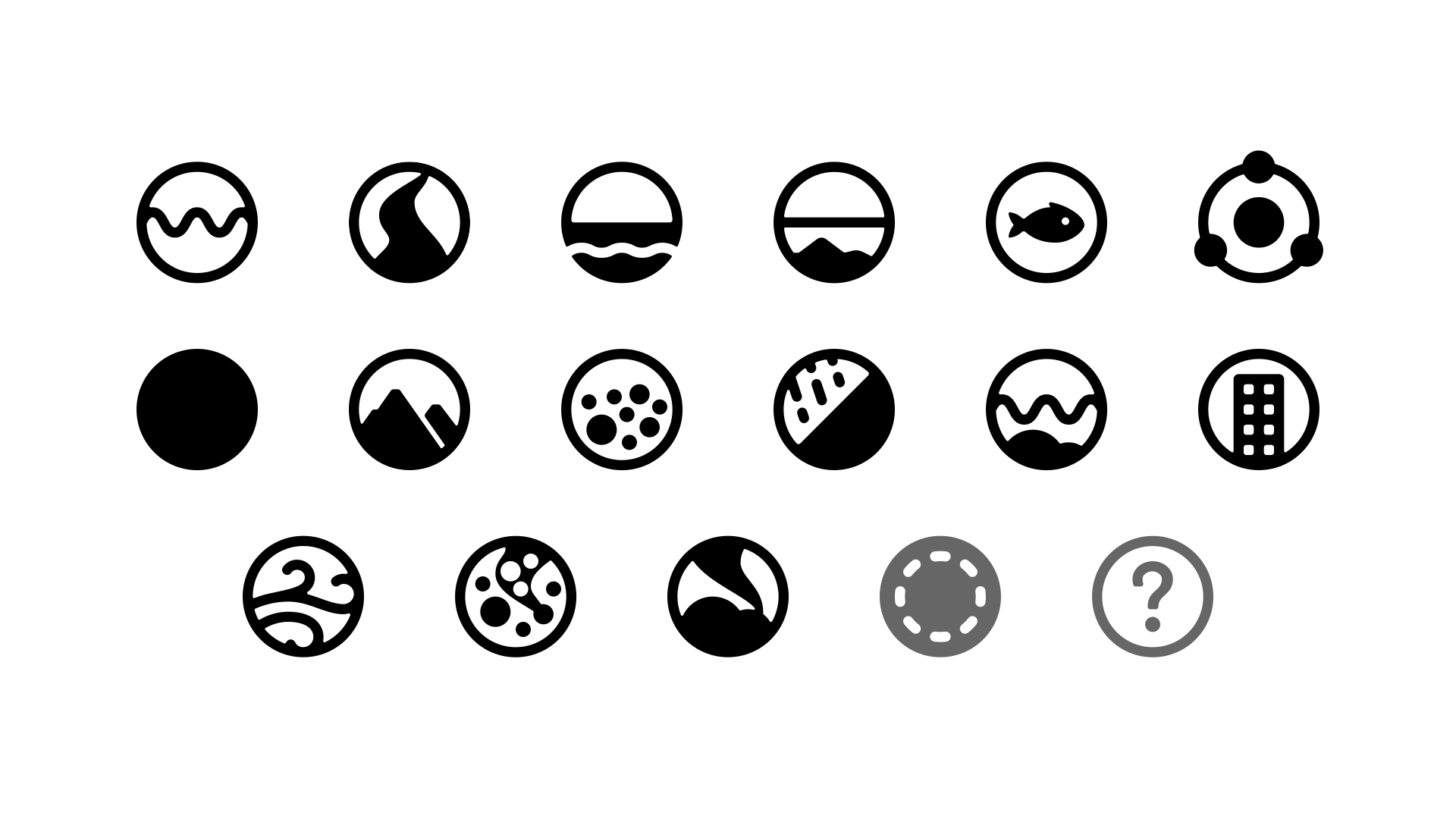
This is my set of SVG icons, and a full guide I wrote to describe each type.
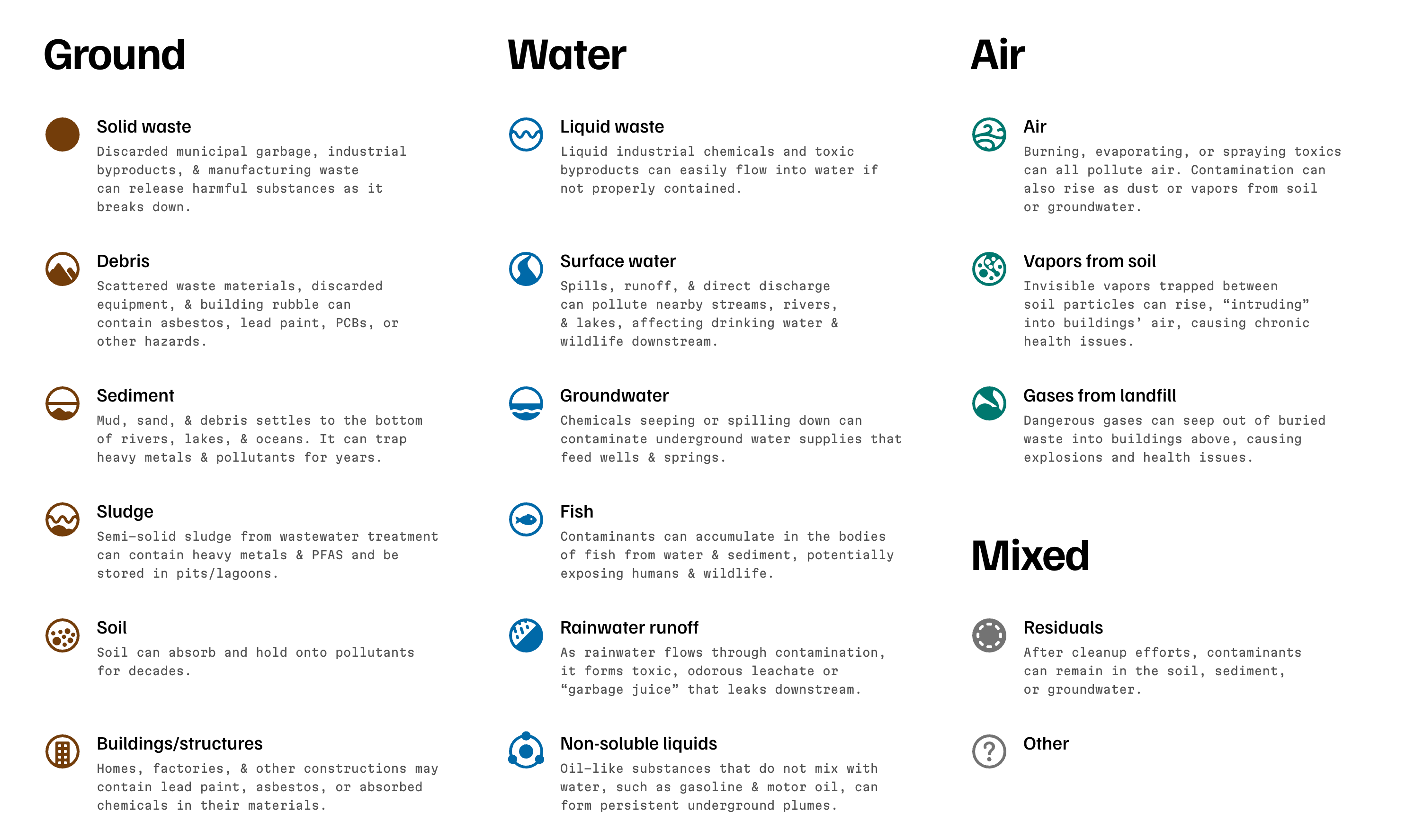
Ground
- Solid waste. Discarded municipal garbage, industrial byproducts, & manufacturing waste can release harmful substances as it breaks down.
- Debris. Scattered waste materials, discarded equipment, & building rubble can contain asbestos, lead paint, PCBs, or other hazards.
- Sediment. Mud, sand, & debris settles to the bottom of rivers, lakes, & oceans. It can trap heavy metals & pollutants for years.
- Sludge. Semi-solid sludge from wastewater treatment can contain heavy metals & PFAS and be stored in pits/lagoons.
- Soil. Soil can absorb and hold onto pollutants for decades.
- Buildings/structures. Homes, factories, & other constructions may contain lead paint, asbestos, or absorbed chemicals in their materials.
Water
- Liquid waste. Liquid industrial chemicals and toxic byproducts can easily flow into water if not properly contained.
- Surface water. Spills, runoff, & direct discharge can pollute nearby streams, rivers, & lakes, affecting drinking water & wildlife downstream.
- Groundwater. Chemicals seeping or spilling down can contaminate underground water supplies that feed wells & springs.
- Fish. Contaminants can accumulate in the bodies of fish from water & sediment, potentially exposing humans & wildlife.
- Rainwater runoff. As rainwater flows through contamination, it forms toxic, odorous leachate or “garbage juice” that leaks downstream.
- Non-soluble liquids. Oil-like substances that do not mix with water, such as gasoline & motor oil, can form persistent underground plumes.
Air
- Air. Burning, evaporating, or spraying toxics can all pollute air. Contamination can also rise as dust or vapors from soil or groundwater.
- Vapors from soil. Invisible vapors trapped between soil particles can rise, “intruding” into buildings’ air, causing chronic health issues.
- Gases from landfill Dangerous gases can seep out of buried waste into buildings above, causing explosions and health issues.
Mixed
- Residuals. After cleanup efforts, contaminants can remain in the soil, sediment, or groundwater.
- Other